
Old Habits Die Hard
Even if one of the dullest Milan derbies in recent memory teaches us that there’s a first time for everything...

If you’re looking for quality Ecuadorian exports—bananas mostly, some shrimp, and cocoa for those with more refined palates—you won’t have to search far in Milan. But the category of “Derby match-winner” was a missing line item.
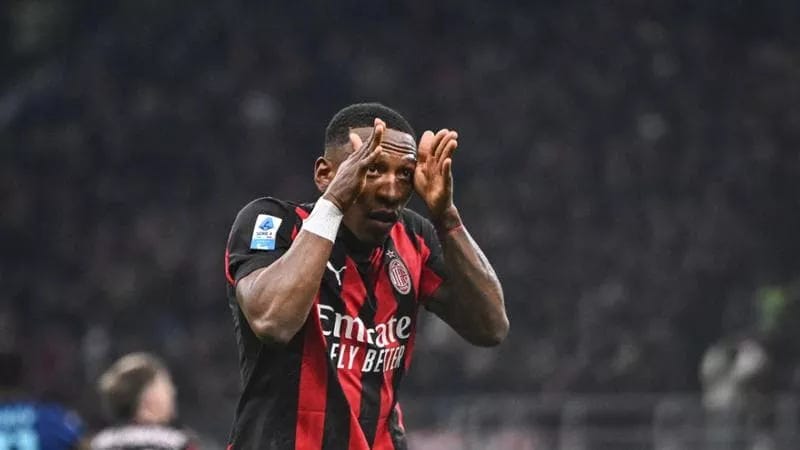
Until Pervis Estupiñán, nicknamed “La Bala” (The Bullet), last night launched himself like a projectile behind a (still) drifting Luiz Henrique to coolly slot past Yann Sommer. And so, the South American full-back—who until Sunday had been a semi-mysterious figure (much like his choice to wear the number 2 shirt while patrolling the left flank) since arriving from Brighton last summer—writes his name into the long list of “nobodies” (or Carneadi, to borrow a term from Milan’s most illustrious writer, Alessandro Manzoni) who found glory in the Derby della Madonnina: from Massimo Paganin to Gianni Comandini, Federico Giunti, Joel Obi, and Ezequiel Schelotto, to name but a few.
Only 68 seconds earlier, the AC Milan defense had parted like the Red Sea before Moses for Henrikh Mkhitaryan—who is nearly the biblical prophet’s contemporary—only for the Armenian to fire straight at Mike Maignan. It was the best chance of a first half that had been intense but deadlocked, defying the expectations of those who believed the Rossoneri would start at full throttle, giving their all in a match that could reignite their Scudetto ambitions. Instead, Massimiliano Allegri, the ultimate “situationist”, did what he has done best for years: he waited. He let his opponents vent their fury and struck them exactly when, as so often happens, the red warning light of imminent danger failed to flicker. It happened in the first derby of the season—the Nerazzurri’s last league defeat before Sunday—and it happened like clockwork again last night. The rest was a slog toward the 95th minute; Daniele Adani, the former player turned firebrand pundit, described it as a “revolting derby.”
It wasn’t quite the “derby-cide” (derbycidio) of 1977—so dubbed by the legendary journalist Beppe Viola, who famously chose to broadcast highlights of an old 1963 derby on La Domenica Sportiva rather than show that Sunday’s drab 0-0—but it wasn’t far off.
In the end, as is usually the case, the post-match chatter centered more on Samuele Ricci’s alleged handball in the box and referee Daniele Doveri’s failure to consult VAR. While this infuriated the Inter camp, manager Christian Chivu remained silent. The Romanian sidestepped the incident, perhaps realizing that painting his players as victims after such a poor performance—especially after Inter benefited from a refereeing error against Juventus two weeks ago—would be a mistake. If the derby was lackluster, the blame lies primarily with the Serie A leaders: too soft when they should have found the knockout blow, predictable, and imprecise. The only alibi afforded the Nerazzurri was the absence of their starting strikers, Lautaro Martínez and Marcus Thuram. They were replaced by two youngsters, Francesco Pio Esposito and Ange-Yoan Bonny, who boast a combined age only two years greater than Luka Modrić and had never started together in the league. It showed.
Beyond that, the common thread linking this Inter defeat to last month’s Champions League collapse against Bodø/Glimt is a creeping fatigue and an inability to change gears or find a spark in moments of crisis. But for this, Chivu bears no blame. For two consecutive winter transfer windows, the club opted not to reinforce a squad that clearly lacks at least two profiles: a trequartista capable of beating his man to create an overload (the Ademola Lookman deal having collapsed in the summer) and an enforcer in the middle of the park—a true “mediano” or holding midfielder.
After yet another failed big-match test, Inter—who across six games against Napoli, AC Milan, and Juve have only managed a largely undeserved win over the Bianconeri in February—is bordering on being labeled the “worst Italian champions ever.” But every win is worth three points, and a side that followed their first derby loss with 14 wins and a draw (against Antonio Conte’s team) is more than capable of mounting another streak. Regardless, this summer must bring a revolution; Inter needs to de-age and renew the squad. But first, there is a Scudetto to win, and the path, at least on paper, looks increasingly uphill from here.
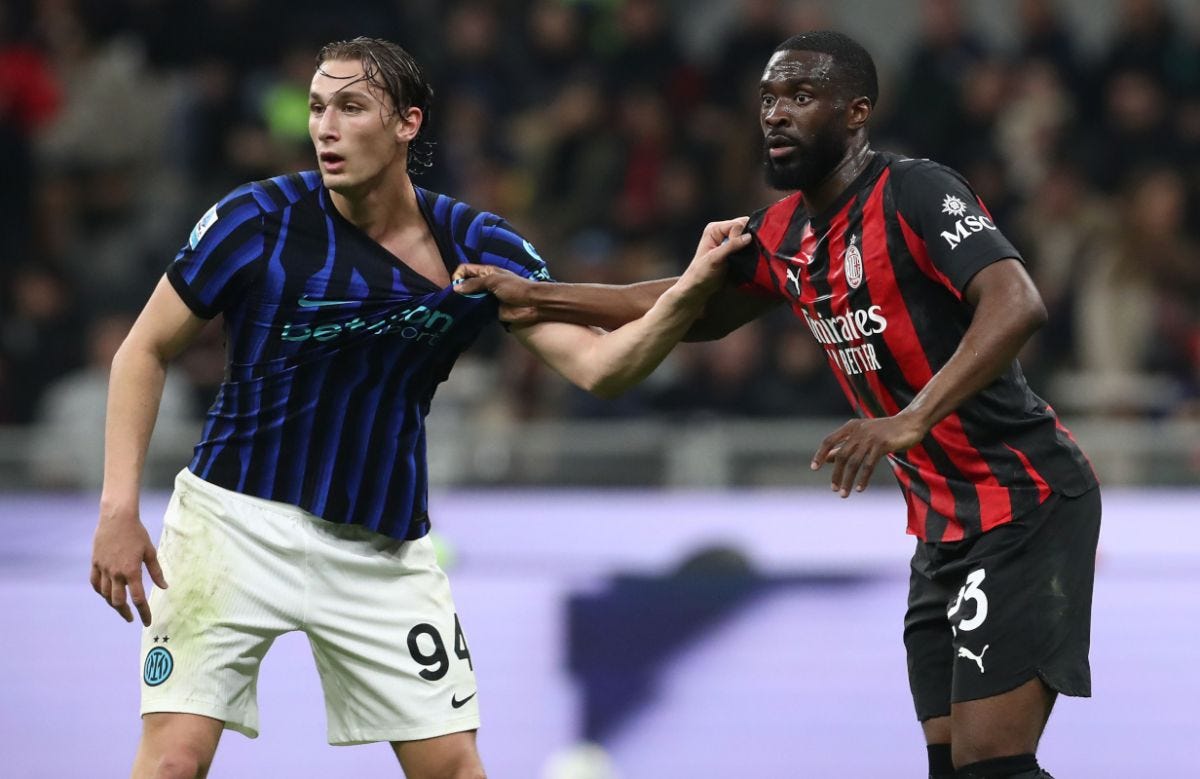
AC Milan, who now sit closer to the league leaders than they do to fifth place, can allow themselves to dream of the title—but with a certain lightness. After 28 games, the Rossoneri have 60 points, the same tally as last season’s champion Napoli at this stage; they have little to reproach themselves for. If anything has been missing, and will be until the end of the season, it’s the goals of a true poacher—those ugly, predatory goals that Rafael Leão, repurposed as a center-forward, can rarely guarantee. Elsewhere, playing only once a week, even Modrić and Adrien Rabiot have plenty of fuel left in the tank, still making the difference in a Serie A played at such a low tempo.
Title race reopened? “Calma,” to use Allegri’s favorite expression. Inter will have learned from last year’s stinging disappointment, where a hunt for the Treble ended with a handful of dust. Furthermore, they have no European distractions now. Unless the fuel light suddenly flashes red, a seven-point lead is more than reassuring.
History dictates that no one has ever lost a title after being 10 points clear in late February, as Inter were just a week ago. But, as the derby teaches us, there’s a first time for everything.