
Just two more saves away
Juventus are in danger of missing out on their minimum objective. While Spalletti deserves to stay at the helm of this project, bad luck and the lack of a reliable goalkeeper has proved costly.

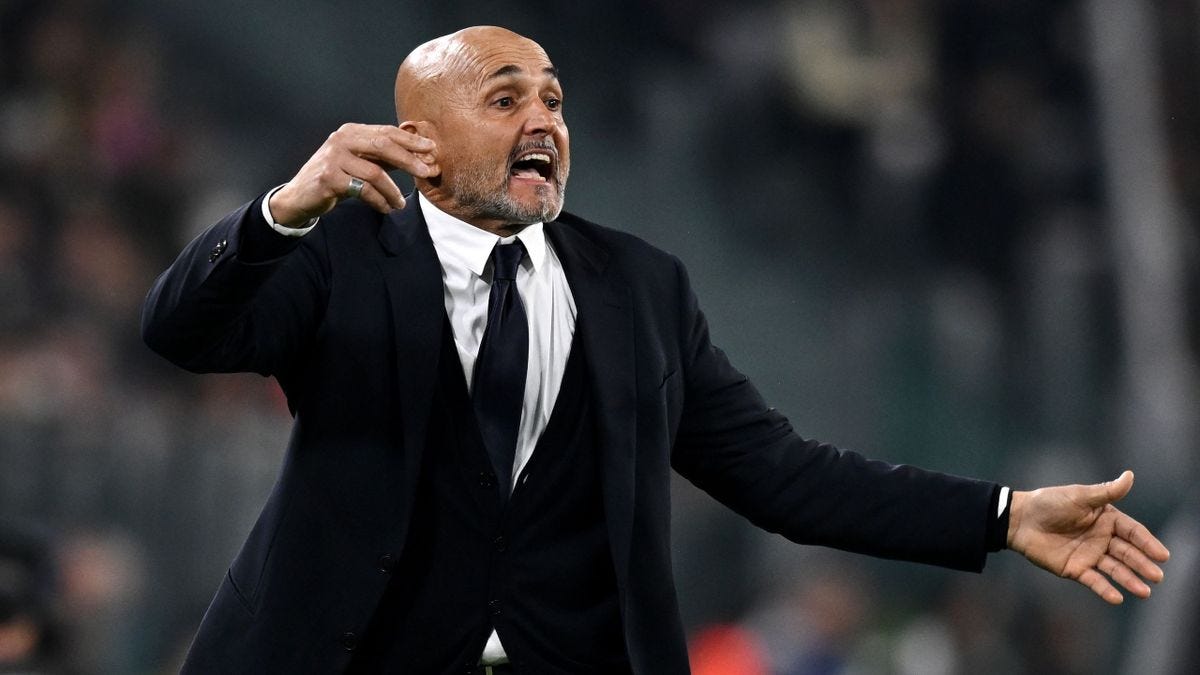
Luciano Spalletti took a philosophical approach. “It was a game we had to win, but there are more important things in life,” he said. Yet the tension was palpable following a 2-0 home defeat against Fiorentina.
The Bianconeri’s Sunday lunchtime had begun with a controversial and bizarre scheduling decision, which saw five crucial Champions League-defining matches kick off at midday. The move was designed to ensure security in Rome for the derby and to avoid clashing with the final of the Italian Open tennis tournament. Two hours later, just as fans would normally be reaching for their dessert or digestif, Juventus had slipped to sixth.
Meanwhile, a Fiorentina side with nothing left to play for had stolen a victory in Turin, ruining their bitter rivals’ afternoon. “Calm down,” Spalletti replied to probing journalists post-match, as they demanded answers for a collapse that threatens to push Juventus out of next season’s Champions League.
With just 90 minutes of the campaign remaining, it is a defeat that could cost the club around €100m in lost revenue. It is a massive problem for Italy’s most successful club, who have failed to win, or even truly compete for, the Scudetto since the Covid-hit 2020 season. Maurizio Sarri was the last manager to win the title in Turin, only to be dismissed because his blunt, sometimes abrasive manner did not fit the Juventus ethos. Yet his side, despite a difficult campaign, was the last to truly dominate while playing attractive football. Five managers have occupied the dugout since then, but Spalletti risks becoming the first to miss the club’s baseline target.
In truth, the cracks have been showing for a while. Since they stopped fighting for the title, Juventus have finished fourth three times, third once, and seventh in 2022–23, though that was due to a 10-point deduction for the capital gains scandal.
Their recent points tallies read: 78, 70, 72 (-10), 71, 71, and 70. Even if they win the Turin derby this Sunday, they can reach a maximum of 71 points and will likely have to settle for the Europa League.
Last season, they were saved only ten minutes from time away at relegated Venezia thanks to a penalty. In May 2021, Gennaro Gattuso’s Napoli could only manage a 1-1 home draw against Verona, allowing the Bianconeri to sneak into fourth on the final game. Despite hovering near the same point thresholds as previous years, many believed Juventus were out of the woods this season. There was an air of optimism.
But looking at the numbers, it is clear that the team that won nine consecutive league titles between 2012 and 2020 has suddenly lost its competitive edge. This is the result of poor board decisions, a lack of clarity, and failed investments, quite simply, wasted money. While Bayern Munich signed Michael Olise from Crystal Palace for €50m two summers ago, the €40.6m Juventus splashed out on Lois Openda in 2025, yielding just two goals in 34 appearances, looks disastrous.
Despite these mistakes, including poor recruitment upfront, with Jonathan David scoring just six times in Serie A and Edon Zhegrova failing to find the net at all, Juventus had managed to steady the ship by swiftly replacing Igor Tudor with Spalletti. For months, the team seemed to rediscover its character, personality, and, in flashes, some fine football.
Following their Champions League exit at the hands of Galatasaray, where they fell just short of a historic comeback after a 5-2 first-leg defeat, in a return fixture where they deserved better, Juventus maintained a steady pace in the league. They went 10 games unbeaten, keeping seven clean sheets. Then came Sunday’s cold shower. Whatever Spalletti might say, the Fiorentina match was a must-win. Instead, fear crept in. Individual errors compromised the game, and the season, casting heavy shadows over the club’s future and Spalletti’s position in Turin.
“I will be meeting with John Elkann,” declared the former national team manager, who only a month ago extended his contract with the club until 2028. Could he really walk away so soon, after just over six months? Neither Spalletti nor Juventus deserve that. After years of turbulence, the club has finally found a coach who can, given time, restore a winning identity and mentality.
Of course, rather than Elkann, the club’s owner, Spalletti should really be meeting with sporting director Marco Ottolini or CEO Damien Comolli, assuming the latter even retains his position without Champions League football.
Here lies the problem: unlike the past, when the club was guided by heavyweights like Luciano Moggi, Antonio Giraudo, and later Giuseppe Marotta, whose move to Inter Milan marked a true passing of the torch in Italian football power, this Juventus hierarchy is lagging behind. The current management lacks a clear stance on many issues and is often invisible. They have certainly failed to grasp the delicate situation facing both the squad and their manager.
The numbers suggest Spalletti has not done a bad job. He has picked up 53 points from 28 league matches, an average of 1.89 per game. Projected over an entire season, that equates to just under 72 points, right in line with recent years. Since his arrival, only champions Inter Milan have picked up more points (68) in the same timeframe.
Other data points to a healthy Juventus:
Expected Goals (xG): Second in the league with 66.96 (just three behind Inter).
Shots per game: Second highest in Serie A, average 16.81 per match.
Kenan Yildiz: Leads Serie A for xG + Expected Assists (xA) at 17.8, performing better than the three Inter players ahead of him in actual goal contributions this season: Lautaro Martinez (16.2), Federico Dimarco (16.1), and Marcus Thuram (12.0).
So, what has been missing? Luck, in large part. Looking at expected points derived from xG metrics, Juventus should be comfortably sitting in second place, with Champions League qualification secured long ago.
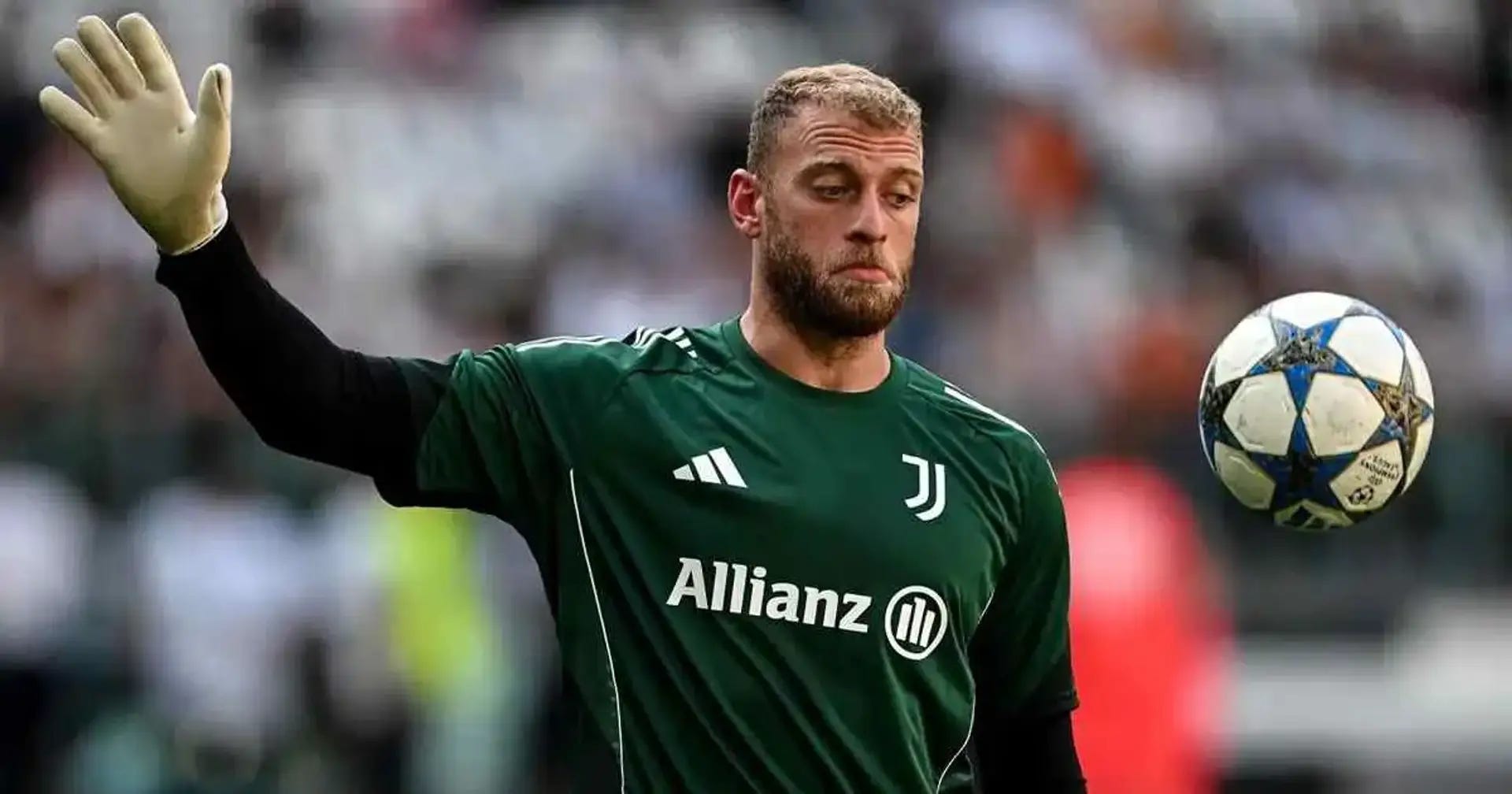
Instead, the blame is falling heavily on goalkeeper Michele Di Gregorio, who made another glaring error on Sunday, letting the opening goal slip under his legs. It is not the first blunder from the keeper, who arrived from Monza in the summer of 2024 for €13.5m, largely due to his proficiency with his feet, a trait that suited former manager Thiago Motta’s style of play.
This season, Di Gregorio’s reflexes have often let him down. Juventus have conceded a goal from the very first shot on target they faced in 46% of their league matches this season (16 goals conceded from 35 shots on target), the highest ratio in the division. When looking exclusively at games drawn or lost due to clear mistakes by Di Gregorio, Juventus have thrown away 10 points.
The contrast with their rivals, AC Milan and Roma, is stark.
Mike Maignan (Milan): Has prevented 7.9 goals this season.
Mile Svilar (Roma): Has prevented 3.7 goals this season.
If your forwards are not scoring, your goalkeeper simply has to keep the opposition out. It is not a matter of Spalletti’s philosophy; it is just the razor-thin margin between achieving your goals and failure.
Football history is full of players remembered for consistency. Goalkeepers are often remembered for surviving chaos at exactly the right moment. Even so, it is hard not to feel that Di Gregorio isn't good enough. Given how hard Juventus are pushing to sign Alisson, I'd guess that internally they agree with that.