
Careful What You Wish For
Italy's 2-0 victory over Northern Ireland felt like the hiss of steam escaping a pressure cooker. But for those convinced the road to the World Cup is now downhill, a reality check is in order.

Some faces simply cannot hide the stakes. Soon after the final whistle blew on their playoff semi-final against Northern Ireland, the Azzurri were already looking ahead to Tuesday. National broadcaster RAI captured the scene post-match: a group of players, led by Federico Dimarco, huddled around a screen watching the penalty shoot-out of Wales vs. Bosnia-Herzegovina.
When the result was confirmed, fists were pumped. The consensus was clear: a trip to Zenica is a far more welcome prospect than a showdown in Cardiff.

On paper, the logic holds. Bosnia sits 66th in the FIFA rankings—closer in profile to the Northern Irish side Italy just dispatched than to 35th-ranked Wales. They play in the intimate, 15,000-capacity Bilino Polje, a far cry from the intimidating cauldron of the Cardiff City Stadium. Furthermore, the Balkan nation hasn’t reached a major tournament since 2014. Yet, these images of celebration in Bergamo risk coming back to haunt Italy. If they fail to qualify for a third consecutive World Cup, “be careful what you wish for” will be the motto of their campaign.
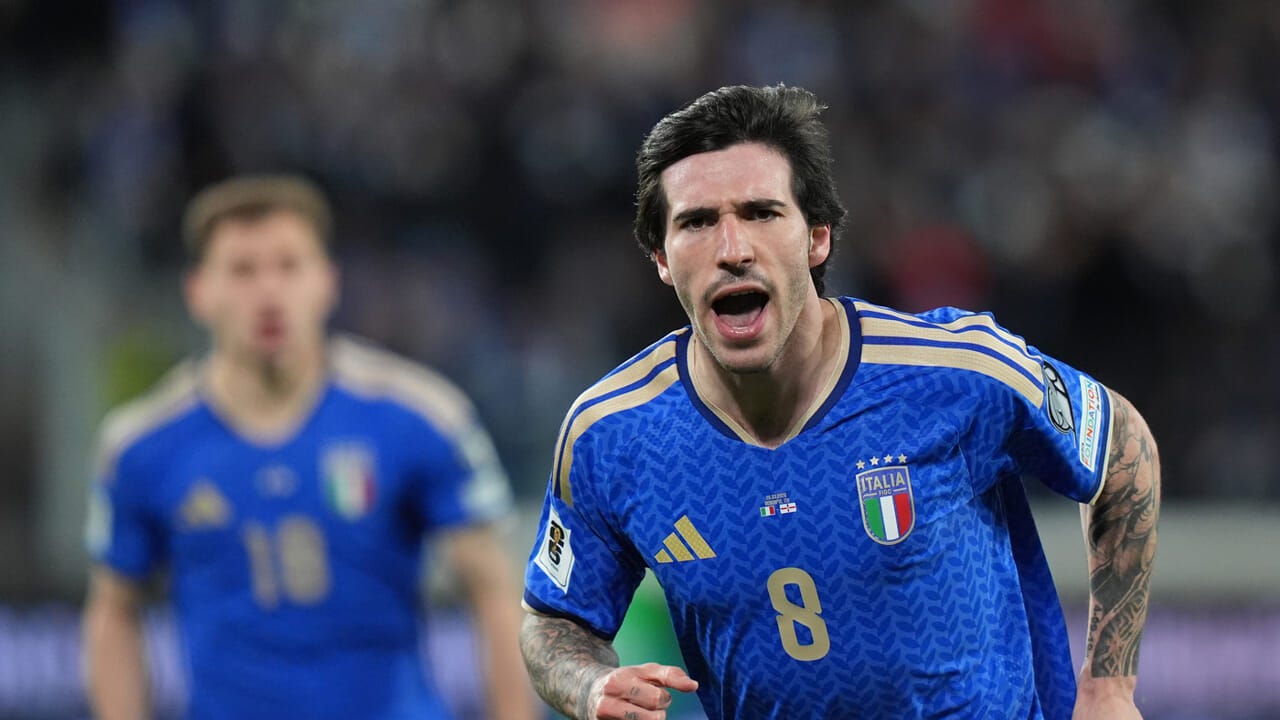
Despite the 2-0 scoreline momentarily “popping the cork” on the tension surrounding Gennaro Gattuso’s camp, Thursday’s performance was largely insufficient. For much of the first half, Italy was ponderous, unable to find the final ball against a disciplined Northern Irish block, that was missing its two best defenders, Conor Bradley and Dan Ballard.
Tactically, the Azzurri looked lopsided. The play was funneled almost exclusively down the right, leaving Dimarco—statistically Italy’s most dangerous asset with 15 goals and 7 assists for Inter this season—ignored on the left flank. When Italy did try to progress, the solution was often a speculative long ball for Moise Kean or Mateo Retegui, who found themselves swallowed up by the three central-defenders.
The Bergamo stadium, picked by Gattuso for its resilience, showed remarkable patience. The crowd held back the whistles even as the travelling Green and White Army grew more raucous by the minute.
The deadlock finally broke when Italy injected some much-needed tempo into the second half. Sandro Tonali, proving why he is a Premier League top player, was the catalyst. He struck a sweet half-volley from the edge of the box—a classic “second ball” recycled after an aerial duel from the tireless, if unpolished, Retegui.
The goal acted as an exorcism, partially banishing the ghosts of the North Macedonia disaster four years ago. When Northern Ireland boss Michael O’Neill rolled the dice with a double attacking substitution, Italy killed the game. Moise Kean’s finish (assisted again by Tonali) provided a rare moment of joy for a striker enduring a tough season.
Kean’s form is a paradox: at Fiorentina, he is a symbol of wastefulness, trailing his Expected Goals (xG) by a big seven-goal margin. For the Azzurri, however, he is a guaranteed return, boasting 12 goals in just 25 caps. He remains a godsend in these dark times for Italian goalscorers.
The late cameo of 20-year-old Inter starlet Pio Esposito offered another glimmer of hope. Esposito showed more technical composure in twenty minutes than Retegui managed in seventy, linking play with a maturity that begs the question: will Gattuso start him in Zenica?
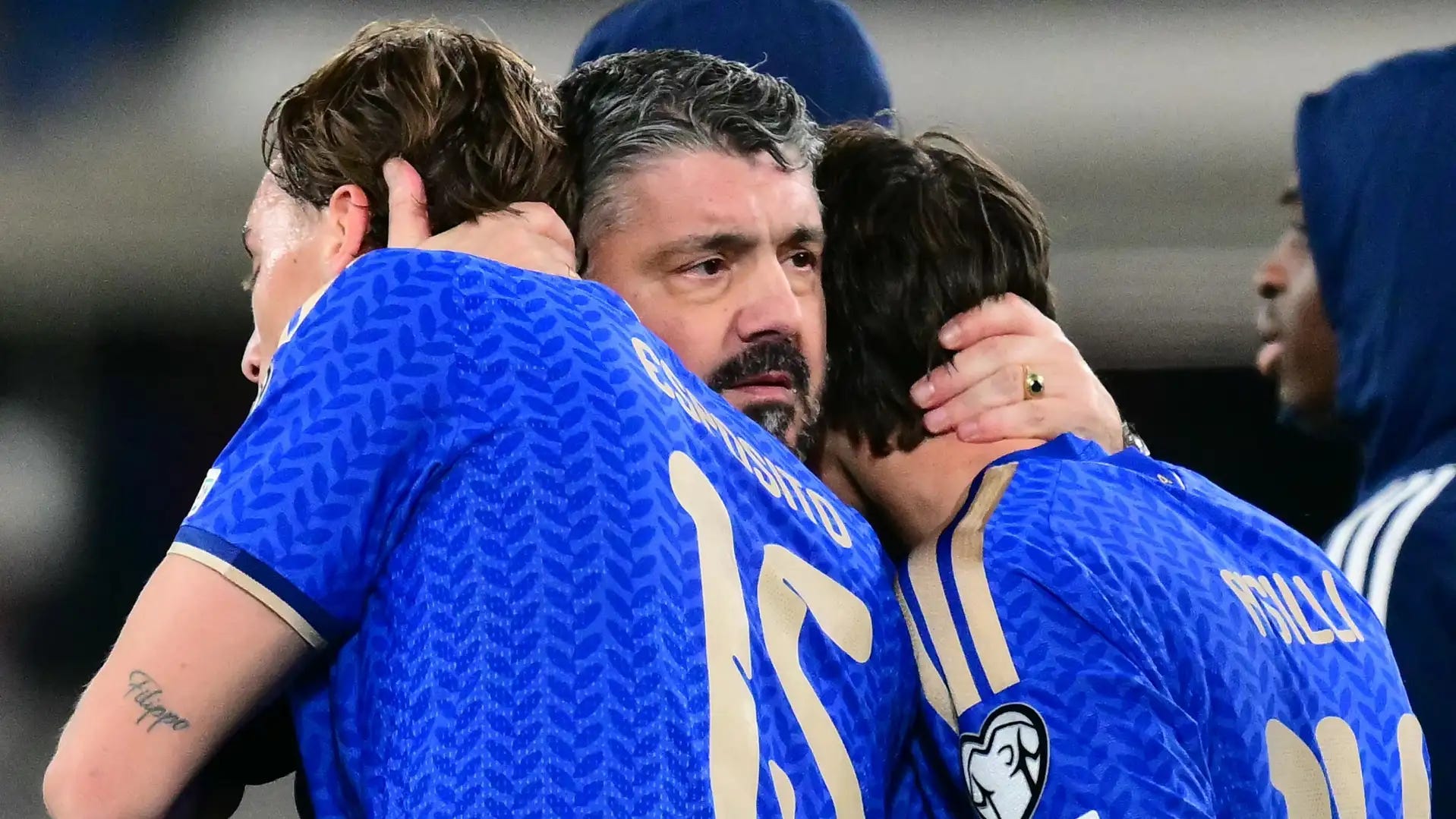
It seems unlikely. Gattuso has built this squad on the concept of the “inner circle,” excluding in-form players like Nicolò Zaniolo and Federico Bernardeschi in favor of a core he trusts implicitly. Pio, at the moment, is well behind in the pecking order.
The coach is under no illusions about his own standing; his managerial career has been a rollercoaster, and a defeat next Tuesday would likely make him “untouchable” for top-tier Italian clubs for a long time.
“I haven’t slept in days. I wake up at 4:30 AM like a bat,” Gattuso admitted pre-match.
The Italian media has only fueled this fire, framing the playoffs as a “generational appointment”—a chance to give an entire cohort of Italian teenagers their first memory of a World Cup. Corriere dello Sport even went as far as using an AI-generated cover of children pleading “Do it for us.”
The message has certainly reached the stands. In Bergamo, a banner read: “Give us our first World Cup.” At this point, the Italian public isn’t even dreaming of winning it. They just want to be there. But as the Azzurri prepares for the game in Bosnia, they would do well to remember: the pressure hasn’t disappeared. It’s just moved house.